

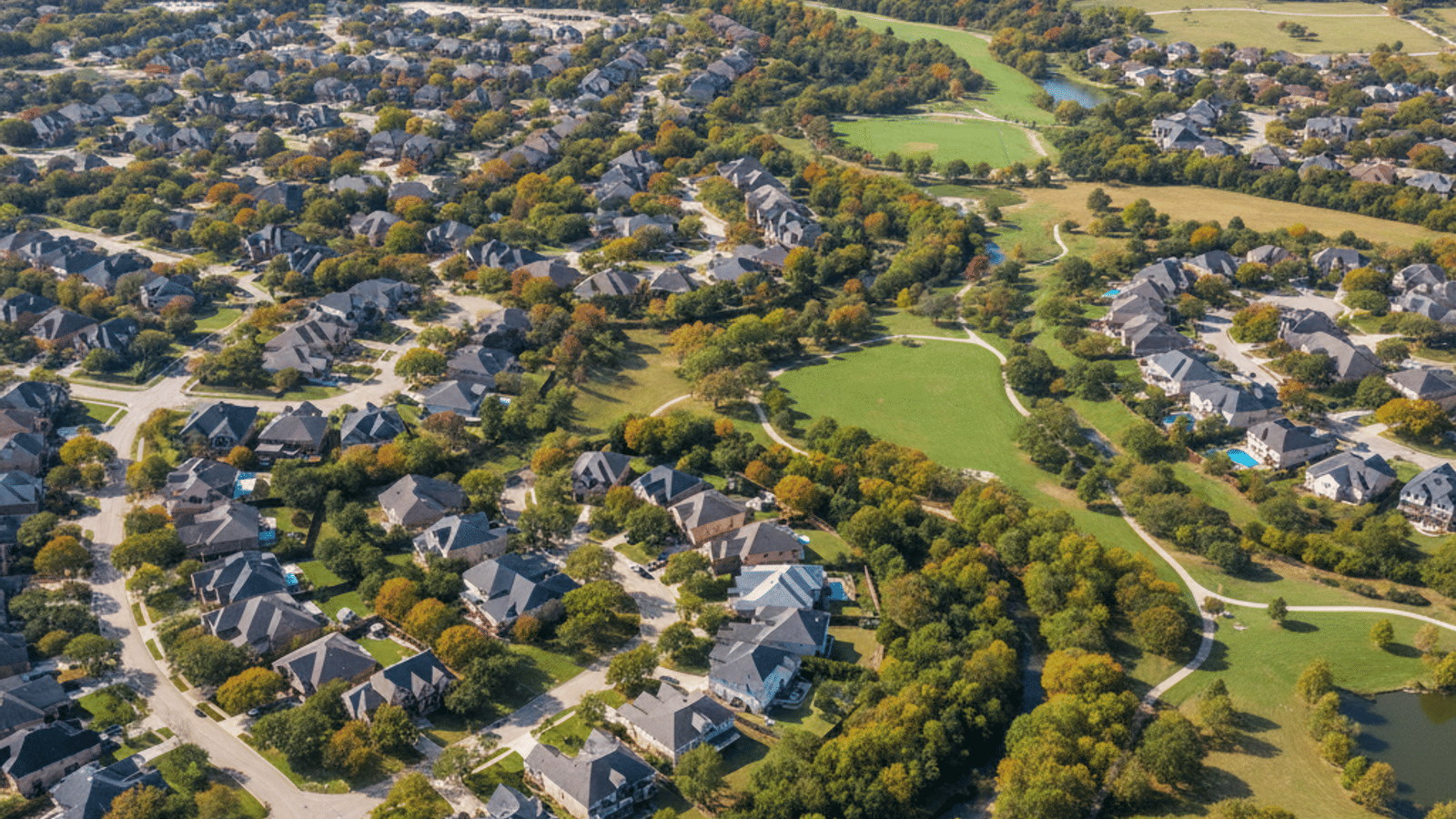
Flower Mound consistently ranks among the top suburbs in the Dallas-Fort Worth metroplex, and for good reason. This Denton County community of roughly 80,000 residents delivers top-rated schools, extensive parks, and a family-oriented atmosphere that is difficult to replicate elsewhere in North Texas.
But no community is perfect, and honest information matters more than sales pitches when you are deciding where to live. This guide covers the genuine pros and cons of living in Flower Mound in 2026, based on current data and local experience.
Location and Geography
Flower Mound occupies a unique position between two major lakes in the DFW metroplex. Grapevine Lake borders the town to the east, while Lewisville Lake wraps around the north and west. This dual-lake setting provides water recreation access within 10 to 15 minutes of most residential areas.
The town sits approximately 30 miles northwest of downtown Dallas and 30 miles northeast of downtown Fort Worth. DFW International Airport is a 20-minute drive from eastern Flower Mound neighborhoods, making it convenient for frequent travelers.
Major road corridors include FM 2499, FM 1171, I-35E (via Lewisville), and TX-121. While the highway network provides multiple routes in and out of town, none of them run directly through Flower Mound, which contributes to both the peaceful atmosphere and the occasional traffic frustration.
Schools and Education
Education quality is the number one driver for families moving to Flower Mound. The majority of the town falls within Lewisville ISD, one of the largest school districts in Texas, serving over 51,000 students.
Flower Mound High School and Marcus High School serve as the primary high school campuses. Both offer strong academics, competitive athletics, and active fine arts programs. The Hebron High School feeder pattern, which serves eastern sections of Flower Mound, has earned A-plus academic ratings.
Western Flower Mound, particularly the Canyon Falls community, falls within Argyle ISD. This smaller district has built a reputation for low student-to-teacher ratios and academic rigor. For complete school details, visit our schools in Flower Mound guide.
Outdoor Recreation and Parks
If outdoor activities are important to your daily routine, Flower Mound delivers at a level that few DFW suburbs can match. The town maintains over 50 parks, totaling more than 2,100 acres of green space.
The Cross Timbers Trail stretches over 10 miles through protected forestland, connecting residential neighborhoods to parks and commercial areas. Twin Coves Park and Murrell Park provide direct lake access for boating, kayaking, and fishing on Grapevine Lake.
Community sports leagues run year-round through the Flower Mound Parks and Recreation department. Youth soccer, baseball, basketball, and swim teams keep families active across all seasons.
The Pros of Living in Flower Mound
Top-rated schools across multiple districts. Whether you land in Lewisville ISD or Argyle ISD, your children will attend schools with strong academic records and active parent communities.
Exceptional outdoor access. Two major lakes, 50-plus parks, and a connected trail system make Flower Mound one of the most outdoor-friendly suburbs in DFW.
Low crime rates. Flower Mound maintains crime rates well below the state and national averages. The Flower Mound Police Department provides responsive community policing that contributes to the town’s overall safety.
Strong community identity. Annual events like Independence Fest, seasonal farmers markets, and holiday celebrations create a cohesive community feel that larger suburbs often lack.
Central DFW location. Thirty minutes to Dallas, Fort Worth, and Frisco puts most major employers and entertainment venues within a reasonable commute.
The Cons You Should Know
Higher cost of living. The median home price of $620,000 runs roughly 50 percent above the DFW average. Property taxes in Denton County add to monthly housing expenses. Read our detailed cost of living in Flower Mound breakdown.
Traffic congestion. Limited highway access means that FM 2499 and FM 1171 carry heavy traffic during peak hours and school zone times. Weekend traffic near retail centers can also be frustrating.
Limited new construction. Most Flower Mound neighborhoods were built in the 1990s and 2000s. Aside from Canyon Falls, large-scale new construction is rare. This limits options for buyers who want a brand-new home within Lewisville ISD boundaries.
Hot and humid summers. Texas summers are no secret, but Flower Mound’s humidity can feel intense from June through September. Daily highs regularly exceed 100 degrees Fahrenheit during peak summer months.
Quiet nightlife scene. Flower Mound is a family suburb, not an entertainment district. The Lakeside DFW area offers some dining and shopping, but serious nightlife requires a trip to Dallas, Fort Worth, or the Legacy West area of Plano.
Cost of Living Overview
Housing dominates the cost equation in Flower Mound. Beyond the median purchase price of $620,000, monthly costs include property taxes (roughly 2.1 to 2.4 percent of assessed value), homeowners insurance, and HOA fees that vary by neighborhood.
Renters pay an average of approximately $2,075 per month for a standard apartment. Groceries, utilities, and transportation costs align closely with the broader DFW average.
For buyers exploring financial assistance options, Texas offers several programs that can reduce upfront costs. Our homebuyer assistance programs guide covers the details.
Commuting and Transportation
Most Flower Mound residents commute by car. The town does not have direct access to DART rail, though the DCTA A-train station in nearby Highland Village provides commuter rail service along the I-35E corridor to Denton and Carrollton.
Common commute corridors include FM 2499 south to I-635 for Las Colinas and Irving employers, I-35E south for Dallas-bound commuters, and TX-121 east for the Frisco and Plano job centers. Average commute times range from 25 to 45 minutes depending on destination and departure time.
Shopping and Dining
Flower Mound has expanded its retail footprint significantly in recent years. The Shops at Lakeside and Lakeside DFW along Grapevine Lake offer upscale dining and boutique retail. River Walk at Central Park provides a mixed-use environment with restaurants, shops, and office space.
For everyday needs, the town has multiple H-E-B, Tom Thumb, and Kroger locations along with the standard mix of national retailers along FM 2499 and Long Prairie Road.
Who Should Move to Flower Mound
Flower Mound is ideal for families with school-age children who want top-rated education in a safe, outdoor-oriented community. It also works well for professionals who commute to Dallas, Irving, or the DFW Airport corridor and want a suburban home base with character.
If you prioritize walkable urban living, vibrant nightlife, or a lower price point, other DFW communities may be a better fit. Explore our top reasons to move to Flower Mound for more perspective, or browse the best neighborhoods in Flower Mound to narrow your search.
Frequently Asked Questions
Is Flower Mound TX safe?
Yes. Flower Mound has crime rates well below state and national averages. The community is consistently rated as one of the safest cities in Texas with populations above 50,000.
What is the population of Flower Mound?
Flower Mound has approximately 80,000 residents as of 2026. The town has grown steadily over the past two decades but maintains a suburban character.
How far is Flower Mound from DFW Airport?
Eastern Flower Mound neighborhoods are approximately 15 to 20 minutes from DFW International Airport. Western communities like Canyon Falls may add an additional 10 to 15 minutes.
Is Flower Mound worth the cost?
For families prioritizing schools, safety, and outdoor lifestyle, Flower Mound delivers strong value despite higher housing costs. The quality of life and strong resale values make it a sound long-term investment.
What is the job market like in Flower Mound?
Flower Mound’s unemployment rate sits around 2.7 percent. Most residents commute to employment centers in Dallas, Irving, Plano, or Frisco, though local job opportunities continue to grow along the FM 2499 corridor.
Take the Next Step
Living in Flower Mound offers a lifestyle that balances nature, education, and suburban convenience. If you are ready to explore homes in the area, the Jay Marks Real Estate team can help you find the right neighborhood and the right home for your family.