What to expect from seller disclosures in Highland Village, TX
A completed Texas Seller's Disclosure Notice does more than satisfy a legal requirement when you sell a house. It sets the baseline for the entire transaction by putting the property's condition in writing before the buyer makes an offer.
In a shifting market where buyers have time to evaluate their options, a missing or vague disclosure gives the buyer an opening for aggressive renegotiation later. Getting this paperwork right upfront protects your asking price and keeps the deal moving toward closing.
Key takeaway
Texas Property Code §5.008 requires most Highland Village home sellers to give buyers a written Seller's Disclosure Notice. The strongest move is to finish it, with repair receipts and clear flood and insurance-claim answers, before you take offers. With single-family homes selling in a median 42 days, buyers have time to inspect and use any surprise to renegotiate. If you are exempt, for example selling as an estate executor, you can skip the form, but known defects still cannot be concealed.
Who this guide is for
You are getting ready to list a Highland Village house and need to decide what goes on the Texas Seller's Disclosure Notice, what to attach to it, and when to hand it to buyers.
Why the seller's disclosure matters for Highland Village home prices
Single-family home prices in Highland Village are down roughly 8.6% year over year, and housing supply has reached 2.7 months. The Seller's Disclosure Notice works as a pricing document as much as a legal one. A complete notice delivered before offers, backed by repair receipts and clear flood, lake, and insurance-claim answers, limits how much of the asking price a buyer can reopen during the option period.
Buyers have more homes to compare and more time to inspect. Roughly three in four sales close at or below asking, with only about 22.9% of homes selling above list price. Any defect a buyer discovers that you did not disclose becomes immediate bargaining power during their option period.
A thorough disclosure might lower a buyer's initial offer, but that happens before negotiation rather than after the inspection. Check the Highland Village housing market page for more trend details, or the selling a home page for pricing strategies.
At a glance
- Median sale price: $574,771 for single-family homes (90 days ending 2026-09-30), down 8.6% year over year
- Homes sold: 62 single-family homes (63 across all home types) in the 90 days ending 2026-09-30
- Median days on market: 42 for single-family homes (90 days ending 2026-09-30)
- Sale-to-list ratio: 98.6% for single-family homes (90 days ending 2026-09-30)
- Sold above list: 22.9% of single-family sales (90 days ending 2026-09-30)
- Months of supply: 2.7 for single-family homes (90 days ending 2026-09-30)
- Inventory: 55 single-family homes (90 days ending 2026-09-30)
- Median price per square foot: $218 for single-family homes (90 days ending 2026-09-30)
What is the Texas Seller's Disclosure Notice?
Texas Property Code §5.008 requires a written statement of the seller's knowledge of the property's condition. It is not a warranty and does not replace an independent home inspection. The form asks you to mark what the home has and whether you know of any defects.
You'll generally see two versions of this document. The Texas Real Estate Commission (TREC) publishes a free form online, while listing agents commonly use a copyrighted version from Texas REALTORS. State lawmakers occasionally propose changes to the required questions, such as the 2023 House Bill 1256 regarding special districts, which remained in committee.
The standard for answering is what you know, which makes "Unknown" a perfectly valid response when you genuinely don't have the information. Signing the document means every "No" is a statement you can be held to later. If you have liability questions, consult a Texas real estate attorney, as this guide is not legal advice.
Who has to give a seller's disclosure in Texas?
With 62 of the 63 recent sales in Highland Village being single-family houses, that statute applies to nearly every resale in town.
That same statute lists specific exemptions. You don't have to provide the notice for court-ordered transfers, foreclosures, or transfers between co-owners, spouses, or lineal descendants. Fiduciaries, such as executors and trustees managing an estate, are also exempt.
Selling a property "as-is" does not automatically exempt you from providing the form. Confirm your exemption status with the title company or an attorney before you decide to skip the paperwork. An exempt seller still cannot make false statements or actively conceal a known defect.
When to deliver the disclosure to buyers
Deliver the completed notice before you accept offers, ideally attached to the listing package. Buyers can then price known issues into their upfront numbers rather than surfacing them during the option period. Under the TREC One to Four Family Residential Contract, a buyer who receives the notice after the contract is signed gains a right to terminate the deal.
On the Highland Village single-family median sale price of around $574,771, the median sale-to-list gap of roughly 1.4% equals about $8,000. A foundation or roof surprise found during the option period routinely becomes a repair request or price cut that exceeds that entire margin. That's a bad place to be renegotiating from.
Early disclosure can invite lower first offers from bargain hunters, which is why it pairs best with accurate pricing. Jay Marks Real Estate can review a draft notice before your listing goes live to make sure it's complete.
Filling out the property items section
The first part of the form is a checklist of the home's systems and features. You'll mark the presence of appliances, HVAC units, the water heater, pool equipment, and the type of water supply and sewer system. If you need help identifying your utility setups, check the utilities page covering city water versus wells.
If your property relies on an on-site sewer facility, a separate TREC information form applies. When answering questions about roof age, pull the invoice or warranty rather than guessing.
You must also indicate if any present items are not working. Listing an item as present on the form implies that it conveys with the sale, so remove or exclude anything you plan to take with you before filling this out.
Disclosing known defects
The form asks specific questions about the condition of the foundation, slab, walls, ceilings, roof, plumbing, electrical systems, windows, and drainage. When you disclose a defect, write a useful explanation: what happened, when it occurred, what was done to address it, and who did the work.
North Texas clay soils move with moisture, which is why foundation and drainage answers get intense scrutiny in this area. The USDA Natural Resources Conservation Service's Web Soil Survey maps the shrink-swell expansive clay soils dominant in Denton County.
Walk the house with the form in hand. Note cracks, sticking doors, and stains you might have stopped noticing over the years. Vague answers like "minor settling" invite more inspection scrutiny than a specific, documented explanation.
Past repairs, foundation work, and termites
You must disclose previous foundation repairs, roof repairs, termite or wood-destroying insect damage and treatment, and previous fires or water penetration. Attach receipts, engineer letters, and repair warranties directly to the notice.
Ask your foundation repair company whether its warranty transfers to a new owner and what the transfer fee is. Don't promise a transferable warranty you have not confirmed. Find your termite treatment bond paperwork and check its renewal date.
A repair is still a disclosure. "Fixed" does not mean "No," and leaving a documented repair off the form is a common source of post-closing disputes.
Flood zones and Lewisville Lake requirements
Texas Senate Bill 339, effective in 2019, requires sellers to disclose whether their home is located wholly or partly in a 100-year floodplain, a 500-year floodplain, a flood pool, or a reservoir. The form also asks about flood insurance, prior flooding, flood claims, and FEMA or SBA assistance.
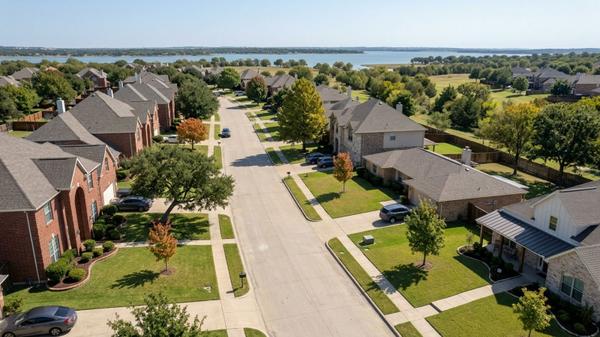
Lake-side and creek-side Highland Village lots need extra care here. Lewisville Lake is a U.S. Army Corps of Engineers reservoir surrounded by government land and flowage easements. Texas Property Code §5.019 also requires a seller of property adjoining a reservoir built under Chapter 11 of the Water Code with a storage capacity of at least 5,000 acre-feet to give the buyer a written notice of water level fluctuations.
Look up your address on the FEMA Flood Map Service Center, check the title commitment and survey for a flowage easement, and locate any flood-insurance declarations page. Checking "not in a flood zone" on a FEMA map does not settle the question if water has previously entered the home or garage. A prior-flooding question appears separately on the form and requires its own answer.
Insurance claims and hail damage
The disclosure asks about insurance claims other than flood, and specifically about claim proceeds you received but did not use for repairs. North Texas hail is the most common trigger for roof claims in the area. Review the weather page for seasonal storm context.
Request your CLUE report from LexisNexis so your answers match what a buyer's insurer will see. If a roof claim was paid, gather proof of the replacement: the invoice, permit, or roofer warranty. A paid claim with no completed repair is exactly what the unremediated proceeds question exists to catch. Buyers' insurers can see your claim history, so accurate answers aren't optional.
Permits, additions, and HOA rules
You must disclose room additions, structural modifications, or other alterations made without permits. The form also asks about HOA membership, mandatory fees, and common areas.
At the Highland Village single-family median of $218 per square foot, a 200-square-foot sunroom or converted garage represents roughly $43,600 of implied value. A buyer, lender, or appraiser questioning its permit status puts real money in play.
Request the property's permit history from the City of Highland Village building inspections office before answering the additions question. Disclosing unpermitted work can prompt a buyer to ask for a retroactive permit or a credit, but hiding it is worse because permit records are public.
Lead-based paint rules for homes built before 1978
Under federal law (40 CFR Part 745), sellers of pre-1978 housing must disclose known lead-based paint hazards. You must provide a specific disclosure form, an EPA pamphlet, and give the buyer a 10-day opportunity to conduct a risk assessment or inspection.
Third-party compilations of Census data report a median year built of 1993 for Highland Village, with under 1% of units built before 1940, meaning this rule only applies to a fraction of local homes. Check the types of homes page for more housing age context.
Confirm the home's year built on the Denton Central Appraisal District record to see whether the federal lead-paint rule applies to you. The federal rule runs alongside the Texas form, so answering the state lead question does not satisfy your federal obligation.
Extra documents Highland Village sellers provide
Texas Property Code §5.012 requires sellers in a mandatory property owners' association to give buyers a written notice of POA membership, including a statement that unpaid assessments can lead to foreclosure. Under §207.003, the owner is entitled to association governing documents and a resale certificate, with fees capped at $375 and a five-business-day delivery deadline.
The disclosure form also asks about any written inspection reports received in the past four years, which you should attach if you have them. Title companies will typically request your existing property survey and a notarized T-47 affidavit.
If your property sits in a water or utility district, a special district notice applies. Look up the address in the Texas Commission on Environmental Quality (TCEQ) Water District Database and ask the title company. Ask the HOA management company for its current resale certificate fee and turnaround time. Ordering these documents late is one of the more avoidable ways to delay a closing.
What to leave off the form
The seller's disclosure covers the physical property, never the people. Don't describe neighbors, the neighborhood's residents, or anyone's personal characteristics, and avoid commenting on schools or safety. Federal law specifically protects an occupant's HIV/AIDS status, which must never be disclosed.
Mark "Unknown" rather than guessing at an answer. Opinions like "great neighborhood" or "no issues ever" don't belong on a legal form.
Texas law sets specific limits on death-related disclosures, which are covered in the FAQ section below. Well-meant extra commentary can create liability or a Fair Housing violation that the form itself never asked for.
Pros and cons of a pre-listing inspection
A pre-listing inspection lets you find problems on your own schedule. You can price the home accordingly or complete repairs before listing, and hand buyers a report that supports your disclosure. This fits the strategy of limiting option-period renegotiation.
The downsides are the upfront inspection cost and the fact that anything the inspector finds becomes a known defect. Because the form asks about inspection reports from the past four years, once a report exists, it shapes your disclosure.
Ask any inspector whether the report will be written for you or for a buyer. You can't unlearn a finding, so commission an inspection only if you're prepared to disclose or fix what it turns up.
The cost of an incomplete disclosure
Before closing, an incomplete disclosure can lead to buyer termination, aggressive repair demands, and steep price cuts. After closing, buyers can pursue claims such as fraud or misrepresentation if they discover you hid a problem.
Texas courts generally enforce "as-is" clauses in real estate contracts, but there are limits. In Prudential Insurance Co. of America v. Jefferson Associates, Ltd., the Texas Supreme Court held that an as-is agreement does not protect a seller who fraudulently concealed information.
If you have concerns about past repairs or lingering defects, consult a Texas real estate attorney. The as-is clause protects honest sellers, not silent ones.
Questions to answer before you sign
If you're selling as an executor, through a foreclosure, or to a co-owner, review the exemption rules first to see whether you can skip the form. If you're selling a standard resale, focus on gathering your paperwork before listing.
If your lot backs to Lewisville Lake or sits near a mapped flood zone, start with the flood and water-level disclosures. Those require documents that take time to request. If the house was built before 1978, or if you've added square footage, repaired the foundation, or replaced the roof, you'll need permit history and the federal lead-paint form.
If you've filed an insurance claim or had any home inspection in the last four years, pull your CLUE report and past inspection files. Jay Marks Real Estate can help you assemble this package before your listing goes live. The signing date matters because the notice speaks as of that specific date.
Highland Village seller disclosure FAQs
Can you sue a previous homeowner for lying on a seller's disclosure in Texas?
Yes, buyers can bring claims such as fraud or misrepresentation when a seller knowingly gives false answers. As established in Prudential Insurance Co. of America v. Jefferson Associates, Ltd., an as-is clause generally does not protect a seller who fraudulently concealed information. In Texas, the statute of limitations is typically four years for fraud and two years for Deceptive Trade Practices Act (DTPA) claims, but you should consult a Texas real estate attorney, as this is not legal advice.
Where can I find the Texas listing agreement form?
TREC does not publish a standard listing agreement. The commonly used TXR-1101 Residential Real Estate Listing Agreement comes from Texas REALTORS and is copyrighted for use only by its members. The current TREC Seller's Disclosure Notice (Form ID 55-1) is available for anyone to download free online.
What are the three types of disclosures in a Texas home sale?
While Texas law does not officially group them this way, a Highland Village resale typically involves three main disclosure categories: the property-condition notice required by that statute, the federal lead-based paint disclosure for pre-1978 homes, and statutory notices like the Property Owners' Association (POA) membership notice. The POA notice informs buyers about potential assessments and their right to a resale certificate.
What is the most common disclosure in a Texas home sale?
The most common is the Seller's Disclosure Notice, required for most resales of previously occupied single-family homes under Texas Property Code §5.008. TREC publishes a free version (Form ID 55-1), and listing agents frequently use a similar version provided by Texas REALTORS.
Is Texas a non-disclosure state?
Yes, Texas is a non-disclosure state regarding sale prices. Under Texas Tax Code § 22.27, sellers and buyers are not required to report the final sale price publicly to the county appraisal district. However, sale-price non-disclosure is entirely separate from condition disclosure, which Texas law legally requires.
Can a buyer cancel if the seller's disclosure arrives after the contract is signed?
Yes. Under Paragraph 7B of the TREC resale contract, if the buyer does not receive the notice, they may terminate the contract at any time prior to closing and get their earnest money back. If the seller delivers the notice late, the buyer can terminate for any reason within seven days after receiving it.
Do you have to disclose a death in a Texas home?
Texas law does not require you to disclose a death on the property if it resulted from natural causes, suicide, or an accident unrelated to the property's condition. Federal law also prohibits disclosing whether a previous occupant had HIV/AIDS. The disclosure focuses strictly on the physical condition of the property.
Do I have to update my seller's disclosure if something changes before closing?
The notice speaks only as of the date it is signed. However, if a new defect appears or you learn something new before closing, such as a storm-damaged roof or a plumbing leak, the practical step is to give the buyer an updated notice in writing. Consult a Texas real estate attorney or your title company to confirm your obligations and timing.
Sources
- Redfin: Data Center
- TREC: Seller's Disclosure Notice
- HAR: TREC One to Four Family Residential Contract
- Texas Legislature Online: HB 1256 History
- Texas Legislature Online: SB 339 Analysis
- Texas Constitution and Statutes: Property Code Chapter 5
- eCFR: 40 CFR 745.110
- Texas Constitution and Statutes: Property Code Chapter 207
- CourtListener: Prudential Insurance Co. of America v. Jefferson Associates, Ltd.
- eSign: TXR-1101 Residential Real Estate Listing Agreement
- Texas Constitution and Statutes: Tax Code Chapter 22
- USDA NRCS: Web Soil Survey
Categories
Recent Posts